
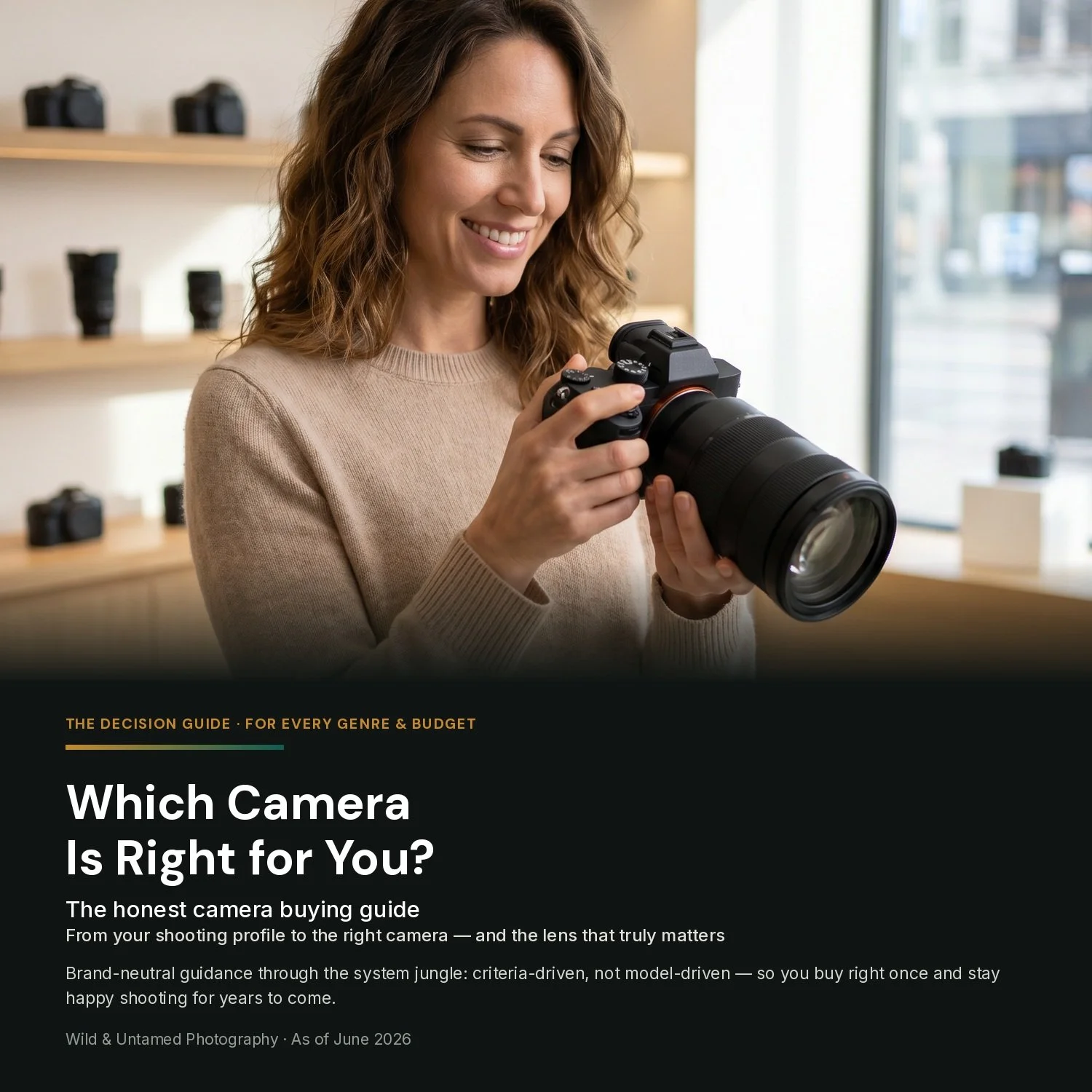
 Bild 1 von 2
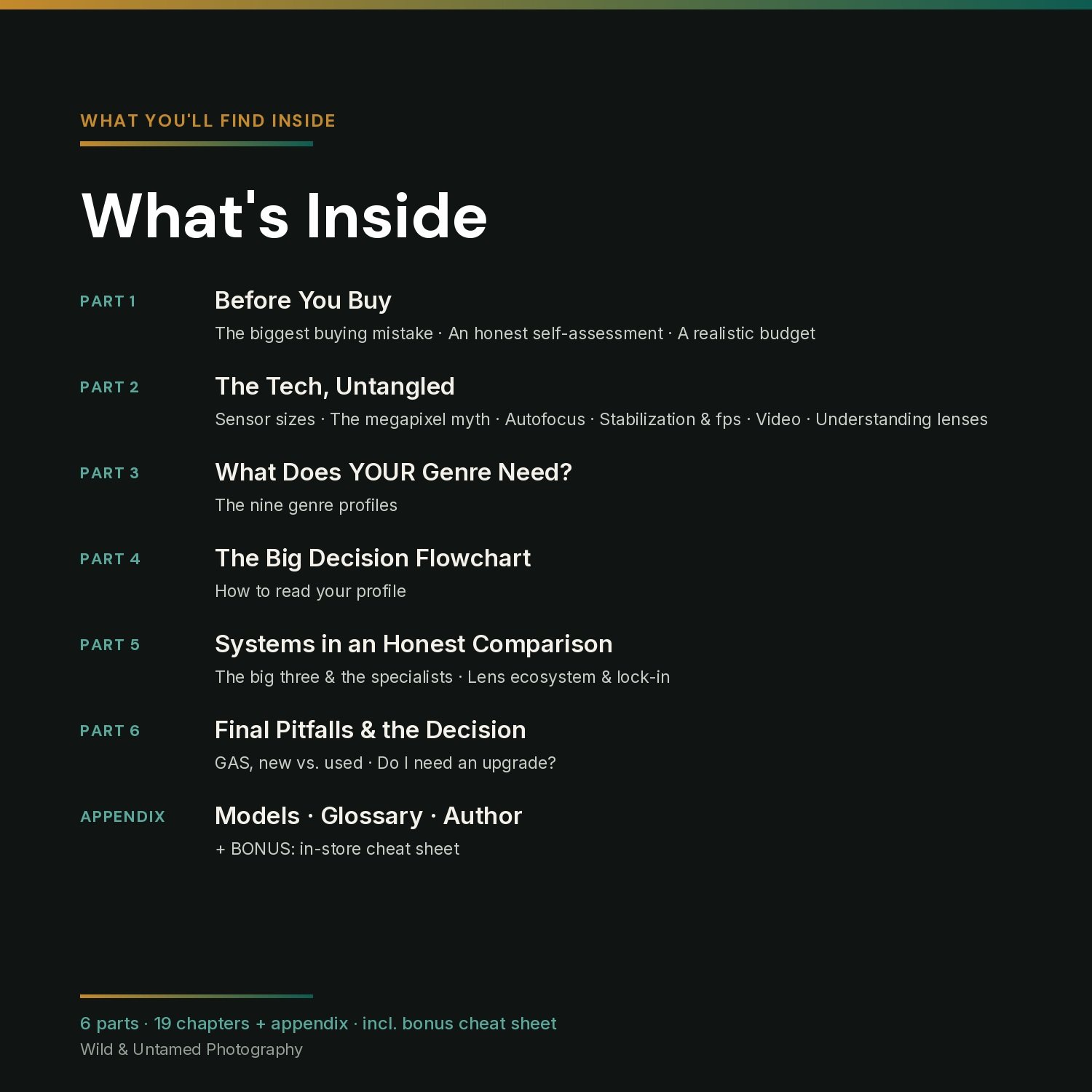 Bild 2 von 2
Six manufacturers. Five sensor formats. A dozen body lineups. And one question nobody answers honestly.
$2,400. That's the average cost of stepping into a "proper" camera system — a body and one decent lens. It's not a decision you make every few months; it's one that stays with you for years. And yet most people make it on the worst possible footing: three contradictory YouTube reviews, a salesperson with a quarterly quota, and a gut feeling that "more megapixels" must somehow be better.
You might already know how it ends: the expensive body gathering dust in a drawer because the gear never matched the genre. The system switch 18 months later that costs you a second fortune. Or that nagging feeling, right there at the unboxing, that you already bought the wrong one.
It doesn't exist — the single best camera. And that's exactly why most buying advice fails: it sells you models instead of helping you think. It talks about sensors before it ever asks what you actually shoot. Buy that way, and you optimize the wrong thing — and you only notice once the money's gone.
This guide flips the script. It won't hand you "the number one." Instead, it walks you — criteria by criteria — from the only question that matters, "What do I actually shoot?", to a crystal-clear requirements profile. Only then do we look together at which system truly meets it. That's the difference between getting lucky and deciding right.
Most recommendations online have a vested interest. This guide has only one: that you end up with the camera that fits you — no matter which badge is on the front.
Here's what's inside the e-book:
The end of the biggest mistake: We dismantle the "more is better" myth and bring you, through honest self-assessment, to your real needs — before you spend a single dollar.
Just enough tech, never more: Sensor formats, autofocus, frame rates, video — explained clearly and always tied to your decision, never to the spec-sheet arms race.
The honest system comparison: The strengths AND weaknesses of every manufacturer, strictly brand-neutral and fact-checked — so you know exactly what you're signing up for.
The big decision flowchart: The visual centerpiece that takes you step by step from your requirements profile to the system that fits.
The factor that often decides it all — the lens: Why "Flirt with the camera, marry the lens." is far more than a slogan, and in the end often shapes your images more than the body itself.
Concrete, current models: A maintained appendix with real recommendations and a clear as-of date — while the guide's logic stays valid for years.
Stop letting tech buzzwords and other people's quarterly targets push you around. Make the decision right once — and shoot happily for years, instead of switching back in regret after 18 months.
Your next click decides whether your next camera is a bullseye or an expensive compromise.
Six manufacturers. Five sensor formats. A dozen body lineups. And one question nobody answers honestly.
$2,400. That's the average cost of stepping into a "proper" camera system — a body and one decent lens. It's not a decision you make every few months; it's one that stays with you for years. And yet most people make it on the worst possible footing: three contradictory YouTube reviews, a salesperson with a quarterly quota, and a gut feeling that "more megapixels" must somehow be better.
You might already know how it ends: the expensive body gathering dust in a drawer because the gear never matched the genre. The system switch 18 months later that costs you a second fortune. Or that nagging feeling, right there at the unboxing, that you already bought the wrong one.
It doesn't exist — the single best camera. And that's exactly why most buying advice fails: it sells you models instead of helping you think. It talks about sensors before it ever asks what you actually shoot. Buy that way, and you optimize the wrong thing — and you only notice once the money's gone.
This guide flips the script. It won't hand you "the number one." Instead, it walks you — criteria by criteria — from the only question that matters, "What do I actually shoot?", to a crystal-clear requirements profile. Only then do we look together at which system truly meets it. That's the difference between getting lucky and deciding right.
Most recommendations online have a vested interest. This guide has only one: that you end up with the camera that fits you — no matter which badge is on the front.
Here's what's inside the e-book:
The end of the biggest mistake: We dismantle the "more is better" myth and bring you, through honest self-assessment, to your real needs — before you spend a single dollar.
Just enough tech, never more: Sensor formats, autofocus, frame rates, video — explained clearly and always tied to your decision, never to the spec-sheet arms race.
The honest system comparison: The strengths AND weaknesses of every manufacturer, strictly brand-neutral and fact-checked — so you know exactly what you're signing up for.
The big decision flowchart: The visual centerpiece that takes you step by step from your requirements profile to the system that fits.
The factor that often decides it all — the lens: Why "Flirt with the camera, marry the lens." is far more than a slogan, and in the end often shapes your images more than the body itself.
Concrete, current models: A maintained appendix with real recommendations and a clear as-of date — while the guide's logic stays valid for years.
Stop letting tech buzzwords and other people's quarterly targets push you around. Make the decision right once — and shoot happily for years, instead of switching back in regret after 18 months.
Your next click decides whether your next camera is a bullseye or an expensive compromise.